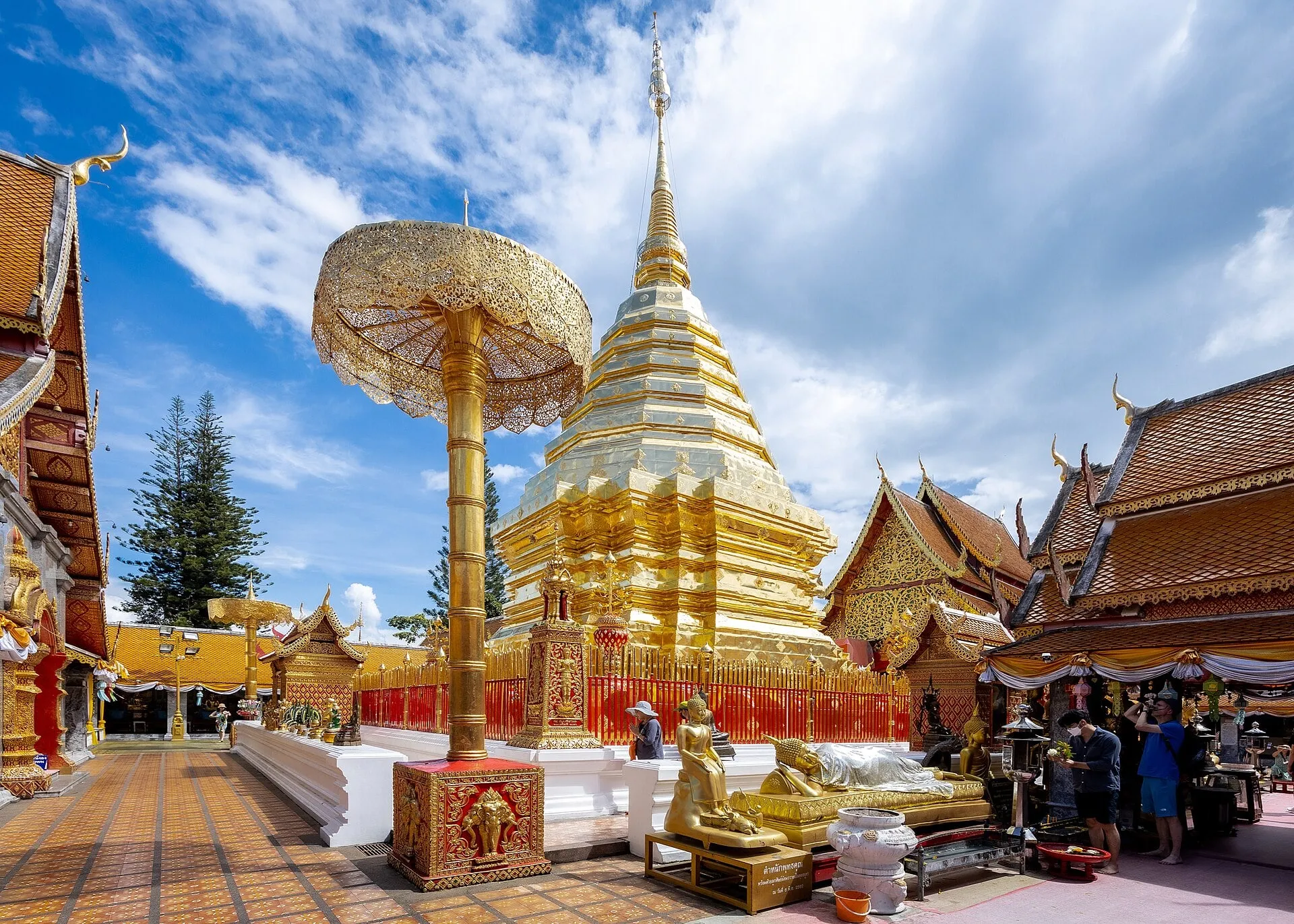
When visiting Chiang Mai, temples are a significant destination many tourists wish to experience. Each temple boasts beautiful architecture and fascinating historical stories. However, visiting Thai temples involves certain etiquette and practices that differ from other cultures, which can sometimes confuse foreign visitors. As a local driver, I’d like to summarize what you should know to ensure you travel comfortably and respectfully.
Dress Code: More Than Just Covering Up, It’s About Appropriateness
The dress code is a basic rule many are already aware of – one must be polite and modest. However, the term ‘polite and modest’ in the context of Thai temples is more nuanced than you might think.
- Cover Shoulders and Knees: This is the minimum requirement upheld by all temples. You should wear a shirt with sleeves (whether short or long-sleeved) and long pants or a skirt that covers your knees. If you wear shorts or a short skirt, you should prepare a shawl or a sarong to cover up.
- Avoid Overly Tight or See-Through Clothing: Even if it covers everything, overly tight or sheer clothing may not be considered appropriate by Thais who observe strict modesty in religious places.
- Remove Hats and Sunglasses: When approaching the Buddhavas area (the zone where Buddha images are enshrined), you should remove your hat and sunglasses to show respect for the place and its sacred objects.
Removing Shoes: Always Before Entering Sacred Buildings
Many know they must remove their shoes before entering a temple, but the point of confusion often is ‘where’ exactly within the temple grounds they need to do so.
- Remove Before Entering the Ubosot, Viharn, and Sala Karn Parien: Generally, you must always remove your shoes before stepping into these main buildings, which house important Buddha images and are used for religious ceremonies.
- Place Shoes Neatly: You should place your shoes on the provided racks or neatly along the edge of the stairs so as not to obstruct others’ paths.
- Walk Barefoot in Designated Areas: Once you’ve removed your shoes, you can walk barefoot inside the buildings. However, if it’s an open-air area outside the buildings, such as around a chedi (stupa) or the temple courtyard, you can typically keep your shoes on.
Etiquette When Interacting with Monks: Important Things to Know
Monks are highly revered in Thai society, so interacting with them appropriately is very important.
- Women Must Not Touch Monks: This is a very strict rule. Women should not directly touch a monk’s body or his robes. If you wish to offer something, you should place it on a cloth that he lays down to receive it, or have a man present the offering on your behalf.
- Offering Items: Whether male or female, when offering something to a monk, you should use both hands to present it, as a sign of respect.
- Sit Lower Than Monks: When near a monk, you should always sit in a position lower than him. If he is sitting on a chair, you should sit on the floor. Or, if he is sitting on a raised cushion (asana), you should sit on the floor below him to show humility.
- Ask for Permission Before Taking Photos: If you wish to photograph a monk, you should always ask for his permission first. Also, avoid taking inappropriate photos, such as capturing him during his private routines or in a way that seems to disturb him.
Foot Placement and Sitting: Showing Respect Through Posture
Foot placement might be unfamiliar to foreign tourists, but it is an important aspect of Thai cultural etiquette.
- Do Not Point Your Feet Towards Buddha Images or People: When sitting inside a temple building, especially in areas where Buddha images are enshrined, do not stretch your feet out towards the Buddha image, the altar, or even point them towards other people, particularly elders or monks.
- Appropriate Sitting Postures: If sitting on the floor, you should sit in the phap-phiap posture (sitting with your legs tucked to one side, feet pointing backwards) or khat-samahti (cross-legged), ensuring your feet are tucked under your body so that your toes do not point forward.
- Avoid Sitting Cross-legged with Raised Feet: Sitting cross-legged with your feet raised high, or dangling your legs without tucking your feet, may be considered impolite and inappropriate in a temple.
Voice and Gestures: Modest and Calm
Temples are sacred places and centers for spiritual practice. You should use your voice and gestures with modesty and calm.
- Speak Softly: Avoid loud conversations, boisterous laughter, or engaging in activities that disturb others, especially inside the main temple buildings.
- Avoid Overt Displays of Affection: Hugging, kissing, or public displays of affection are considered inappropriate in temples.
- Do Not Touch Others’ Heads: The head is considered the most sacred part of the body in Thai culture. Touching someone’s head, whether a child or an adult, is considered disrespectful. You should avoid this action.
Conclusion: Travel with Understanding and Respect
Visiting Thai temples is not just about admiring architectural beauty; it’s also an opportunity to experience and learn about a rich culture. Following these etiquette guidelines will help you have the best possible experience and show respect for the place and local people. If you are ever unsure about anything, the driver is happy to provide guidance throughout your journey, as we want you to enjoy your trip to Chiang Mai to the fullest.