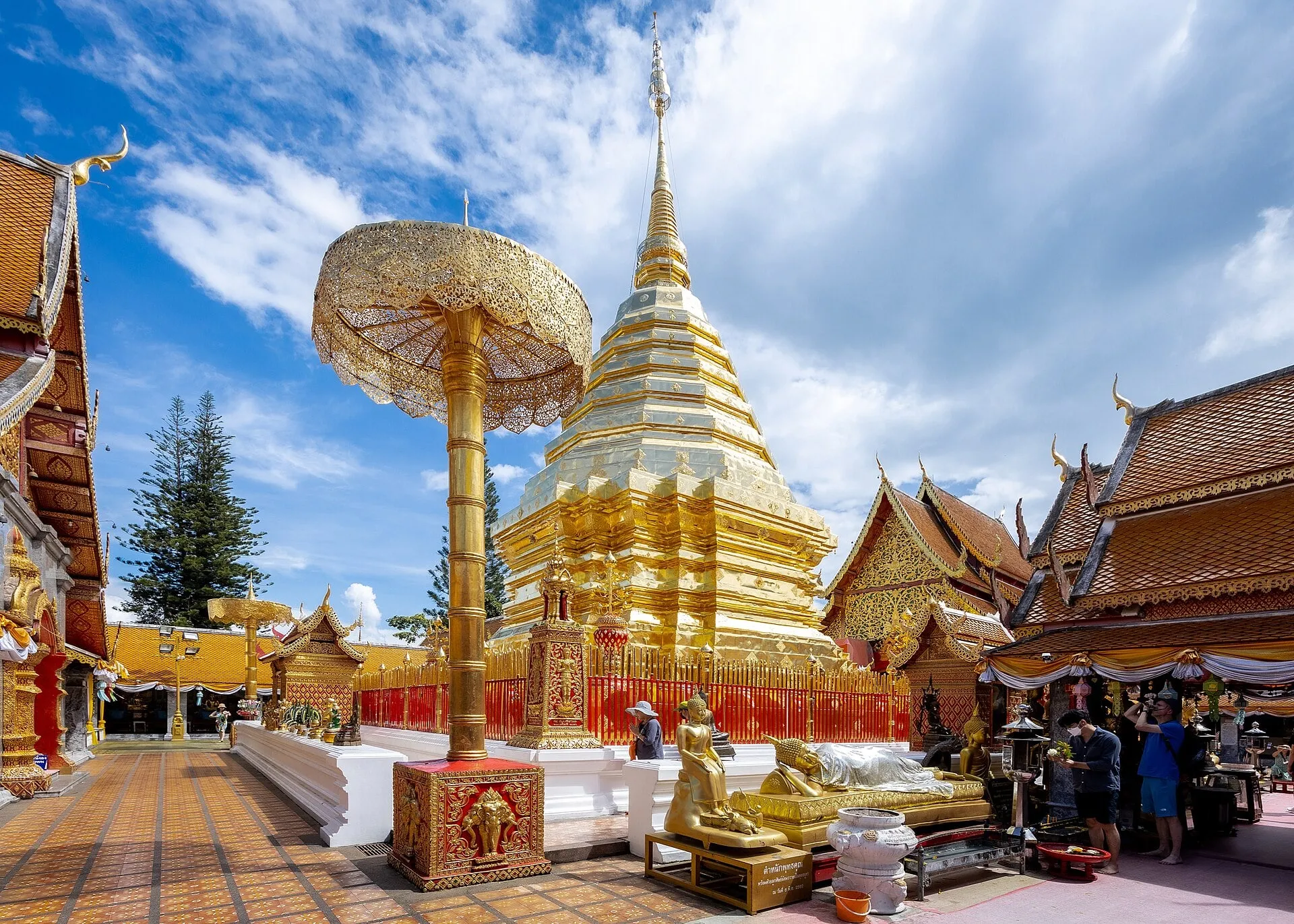
The biggest time-waster on a temple trip is arriving and being unable to enter because your outfit does not meet the dress code. You then have to rent a cover-up at the temple gate—or worse, return to the hotel to change. Both are avoidable before you leave your accommodation.
The rule that works at every temple
Remember two things: your shoulders must be covered, and your knees must be covered.
- Tops must have sleeves; short or long sleeves are fine. Tank tops, spaghetti straps and off-the-shoulder tops are not accepted.
- Trousers or skirts must cover the knees. Shorts above the knee are not acceptable, including for men.
- Sheer clothing that shows what is underneath does not meet the dress code, even if it otherwise covers you.
- Shoes can be worn in the temple grounds, but must be removed before entering a building that contains Buddha images.
Major, busy temples such as Wat Phra That Doi Suthep, Wat Phra Singh and Wat Chedi Luang have sarongs or cover-ups for hire at the entrance. Queues are often long when it is busy, and the garments may not fit well. Bringing your own is much more comfortable.
How to dress for the whole day
A Chiang Mai temple day rarely includes temples alone. The same day might include a mountain stop, a market and a café, so the right outfit should meet temple rules without feeling uncomfortable elsewhere.
A reliable formula is lightweight long trousers or a long skirt, a short-sleeved top and a thin shawl folded into your bag. One shawl works both for a sleeveless top and for cooler weather in the mountains.
Avoid heavy jeans in the hot season. Many temples have stairs to climb, and Chiang Mai city in April is hotter than many people expect.
Etiquette visitors often do not know
Do not point your feet towards a Buddha image. When sitting in a temple hall, tuck your legs behind you or sit cross-legged. Stretching your feet towards a Buddha image is considered very impolite in Thai culture.
Do not point with one finger. If you need to indicate something, use your whole open hand, palm facing up.
Women should not touch monks. This includes handing something directly to a monk. If you need to offer an item, place it on a cloth or table for him to pick up.
Photography is usually fine, but check the signs first. Some halls do not allow indoor photography, and taking a selfie with your back to a Buddha image is considered inappropriate by Thai people.
Keep your voice low. Temples are not museums; people are still there to pray and meditate.
Wat Rong Khun is stricter than most
If your trip continues to Chiang Rai, Wat Rong Khun has a more strictly enforced dress code than most temples, with staff checking at the entrance. It is both a temple and a highly visited work of art, so plan a more conservative outfit for that day.
What to keep in your day bag
One light shawl, one pair of socks for temple floors that become hot during the day and easy-to-remove shoes. You may need to take shoes off and put them back on several times, and these three items let you get through the day without having to think about your outfit again.